From Mudslide Risk to Solid Retaining Wall in NWA
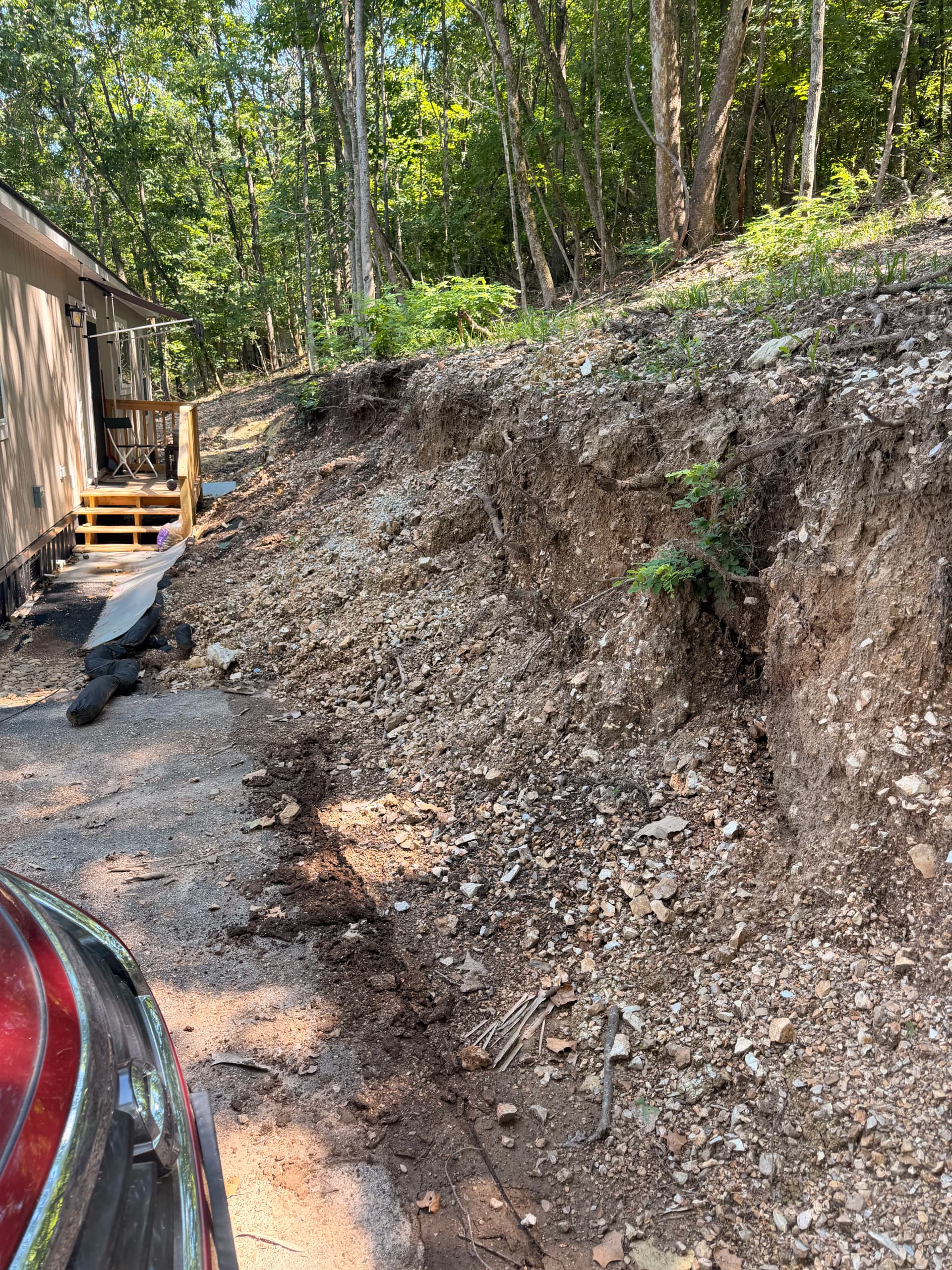
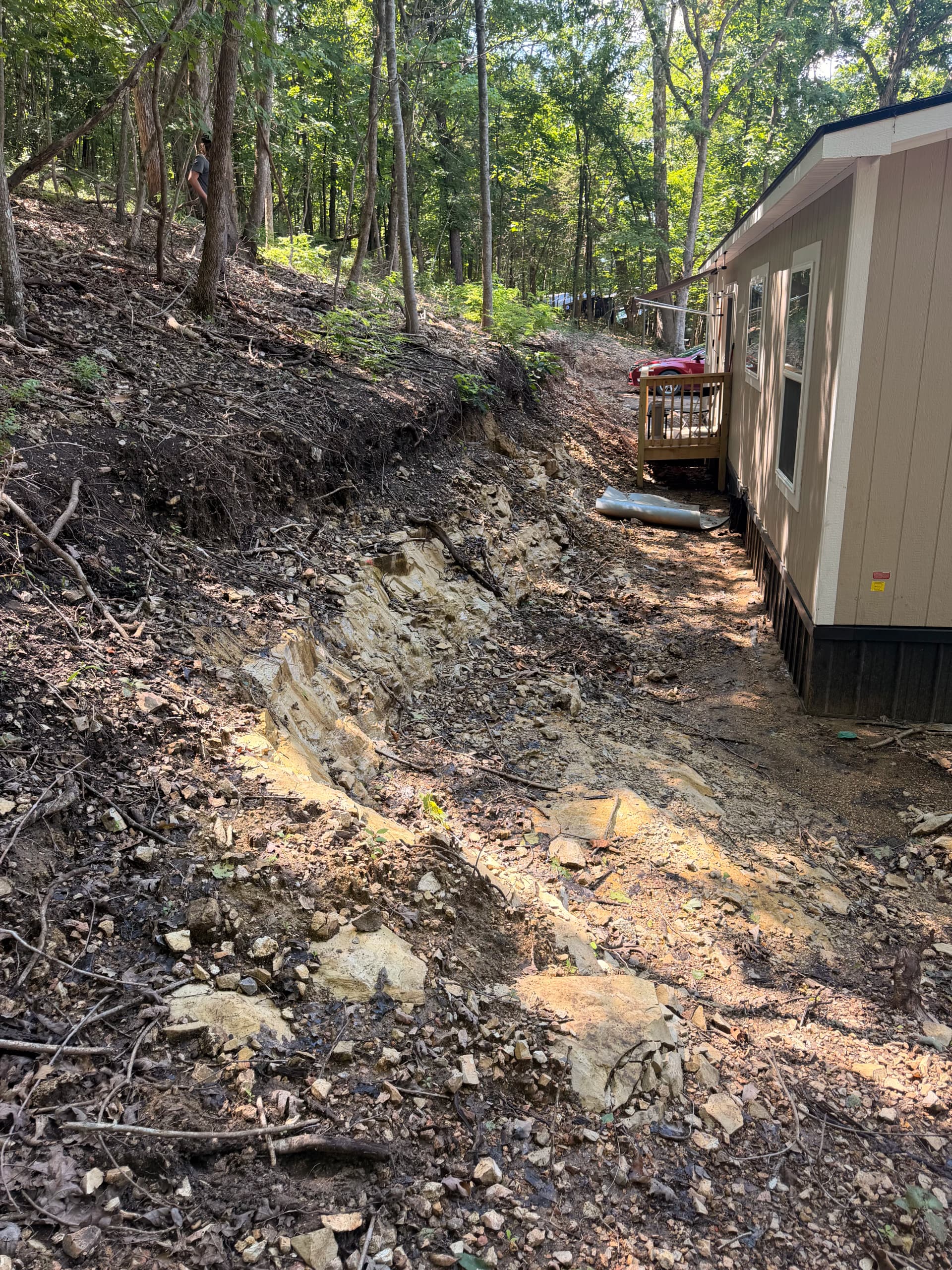
Some jobs are straightforward. This one was not. The hillside next to this home had been actively sliding - soil, rock, and debris creeping closer to the structure with every rain. The space between the hill and the house was a mess of unstable earth, and leaving it alone wasn't an option. Something had to give.
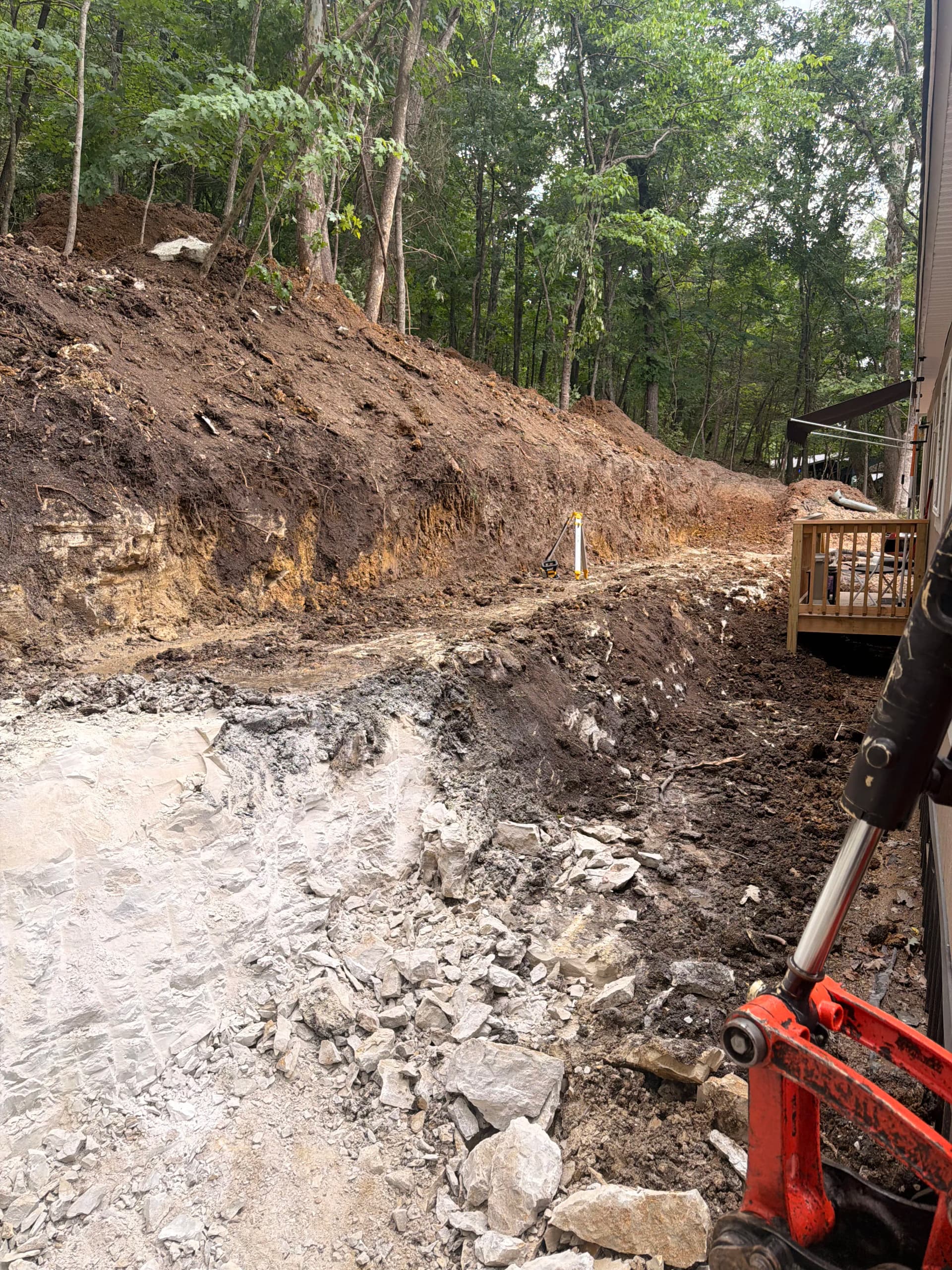
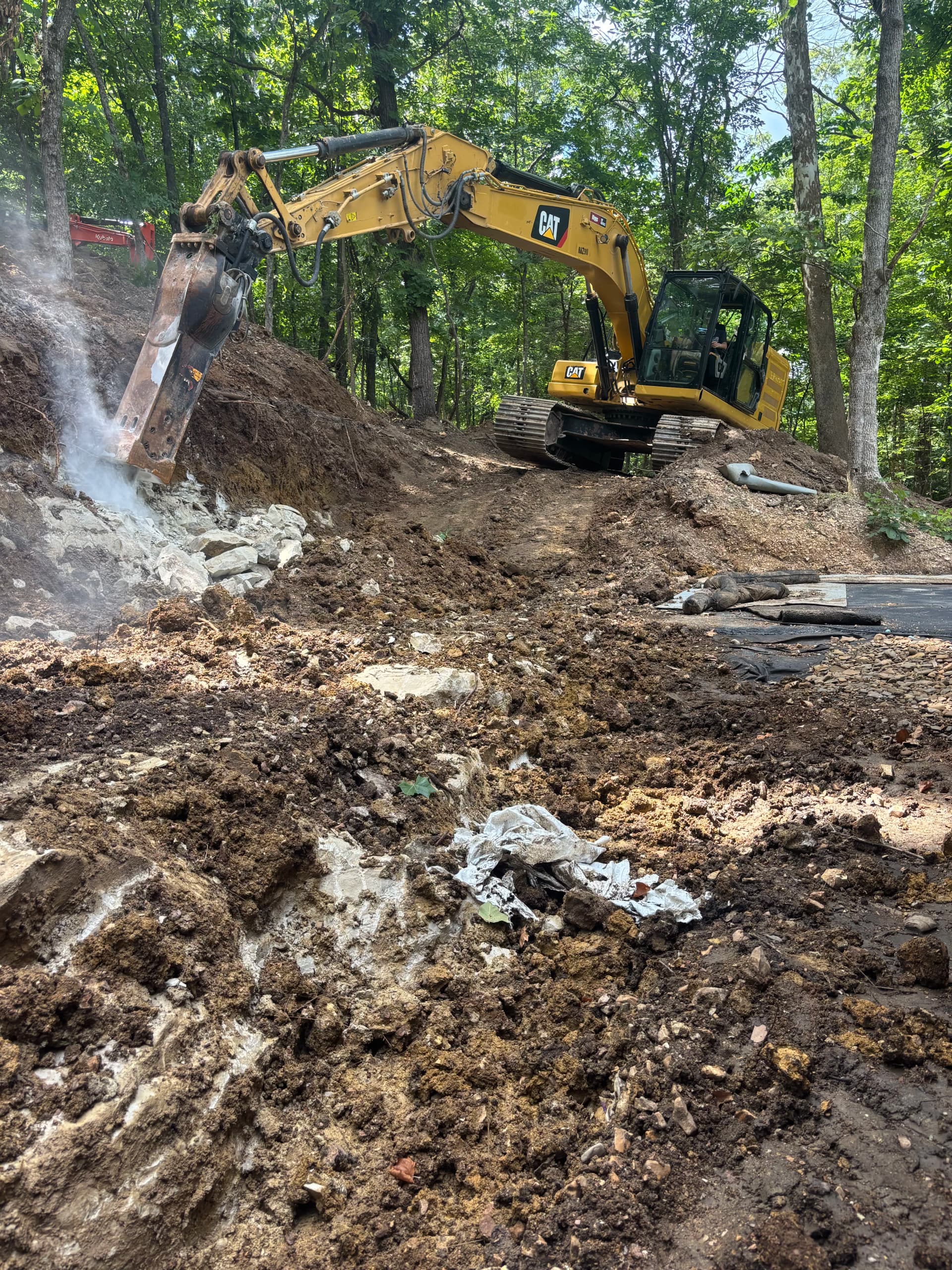
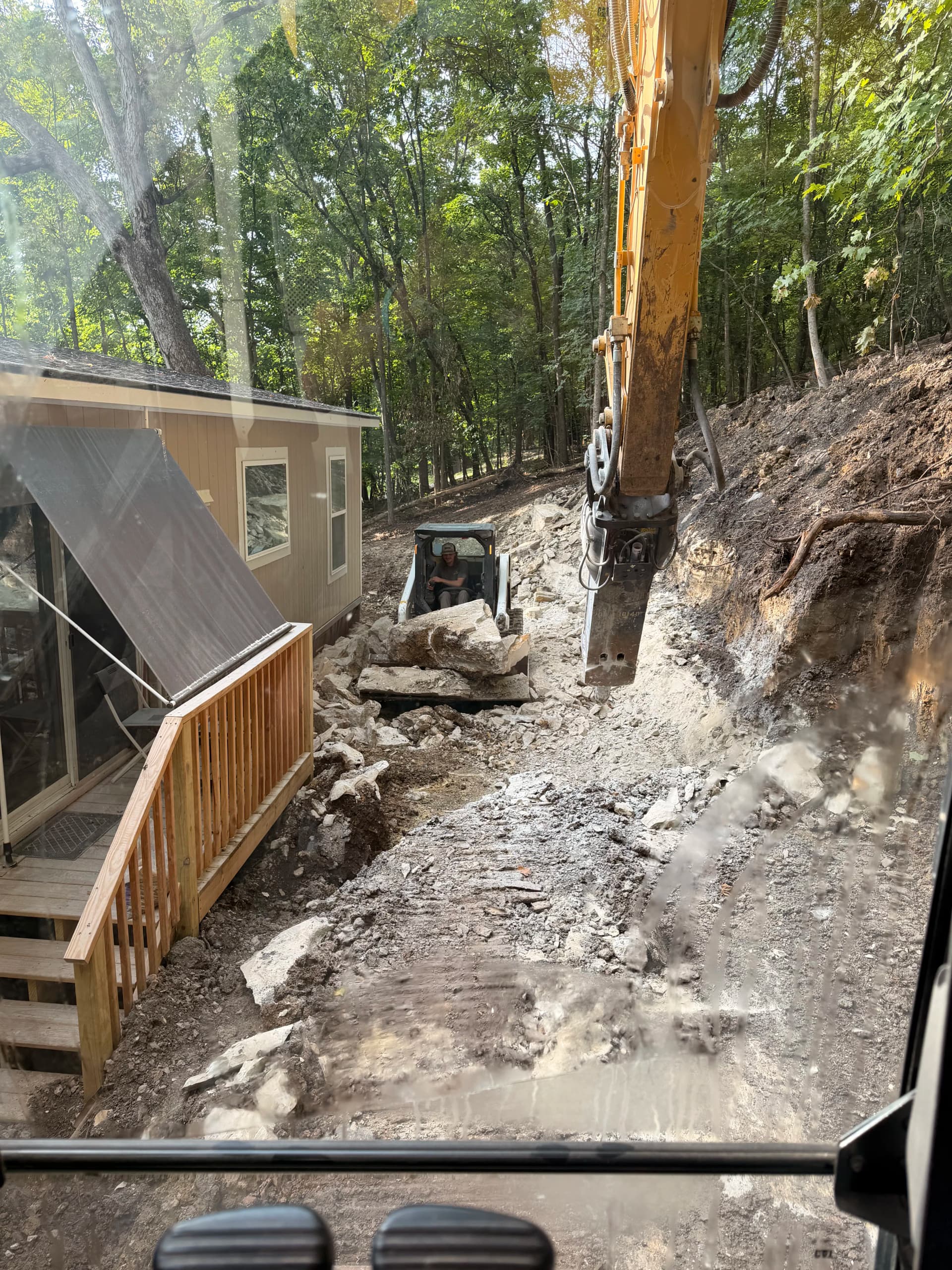
Before we could even think about building a retaining wall, we had to deal with what was underneath. The ground wasn't just soft dirt - we hit bedrock. That meant bringing in a CAT excavator fitted with a hydraulic hammer attachment to break through the rock layer before any real excavation could happen. It's the kind of thing that adds serious time and effort to a job, but skipping it would have meant building on an unstable base. That's not how we do things.
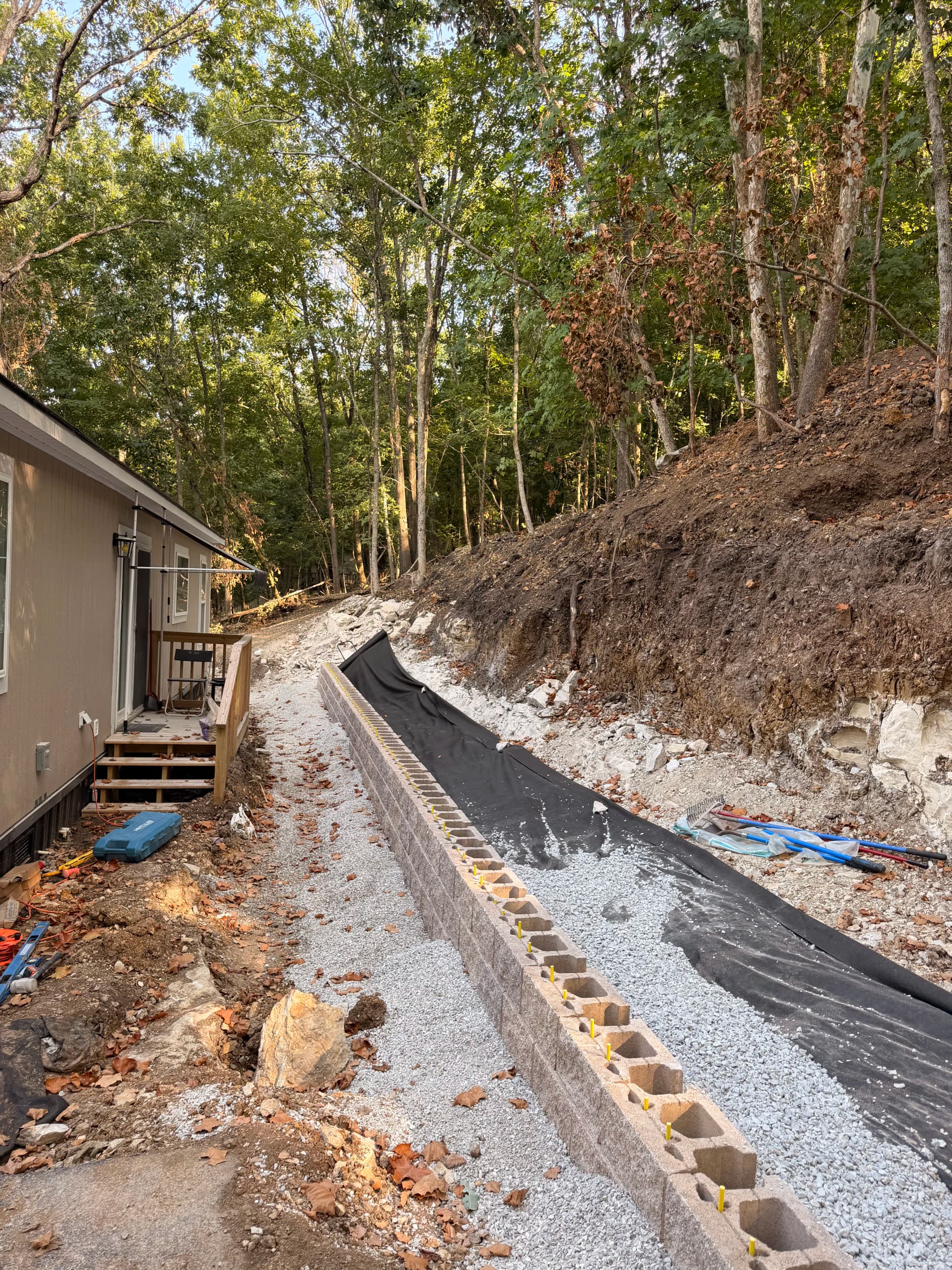
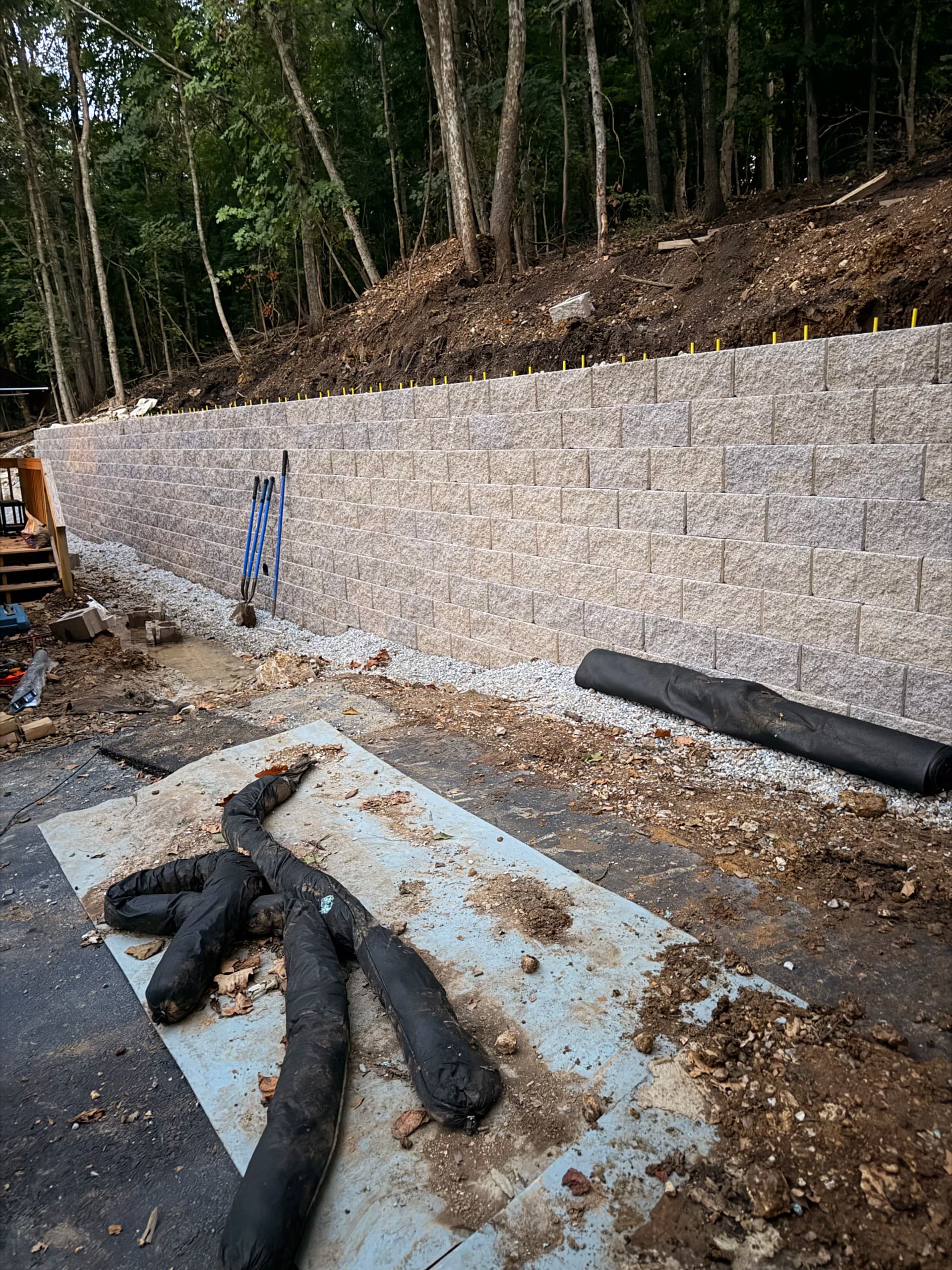
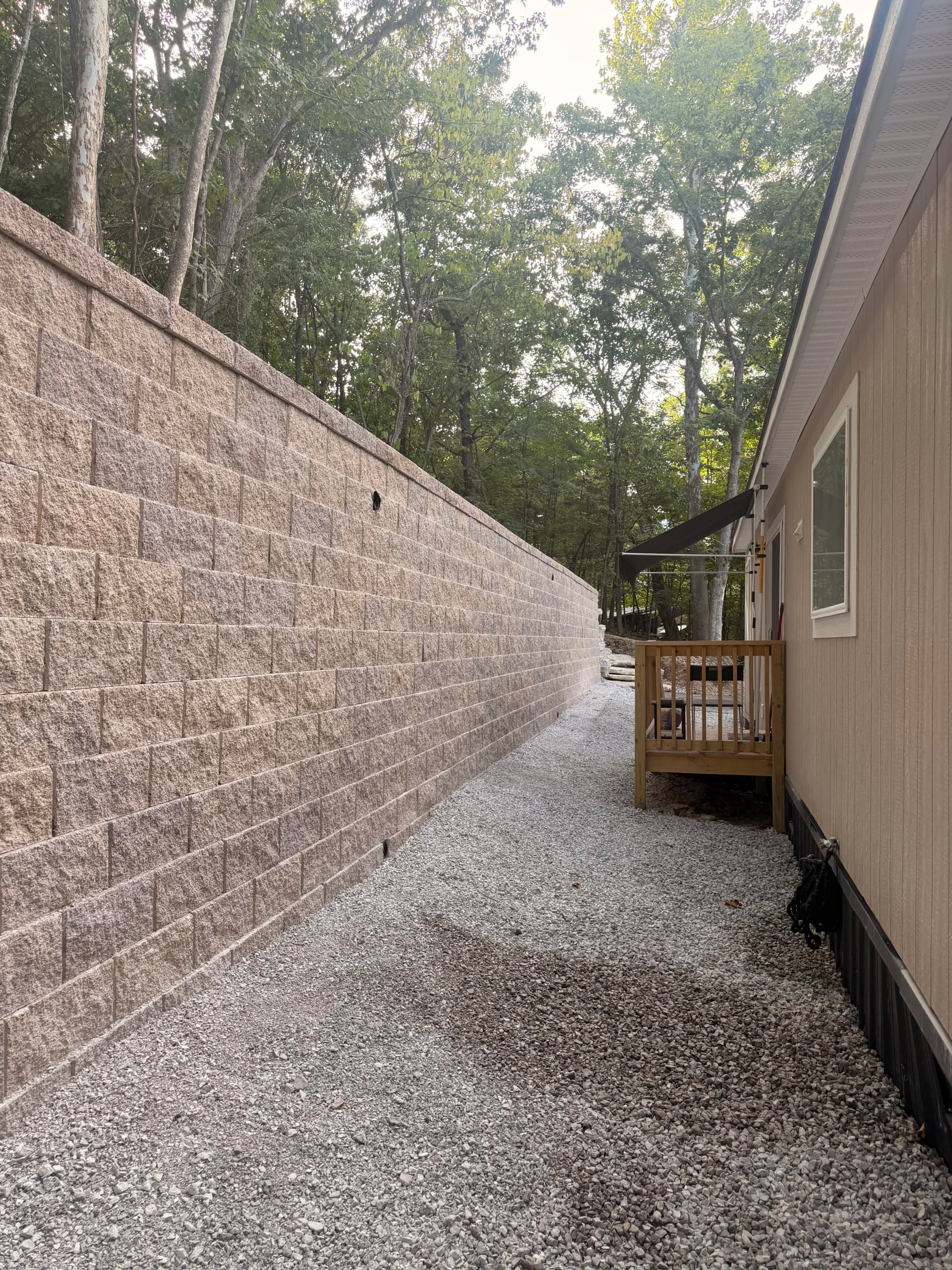
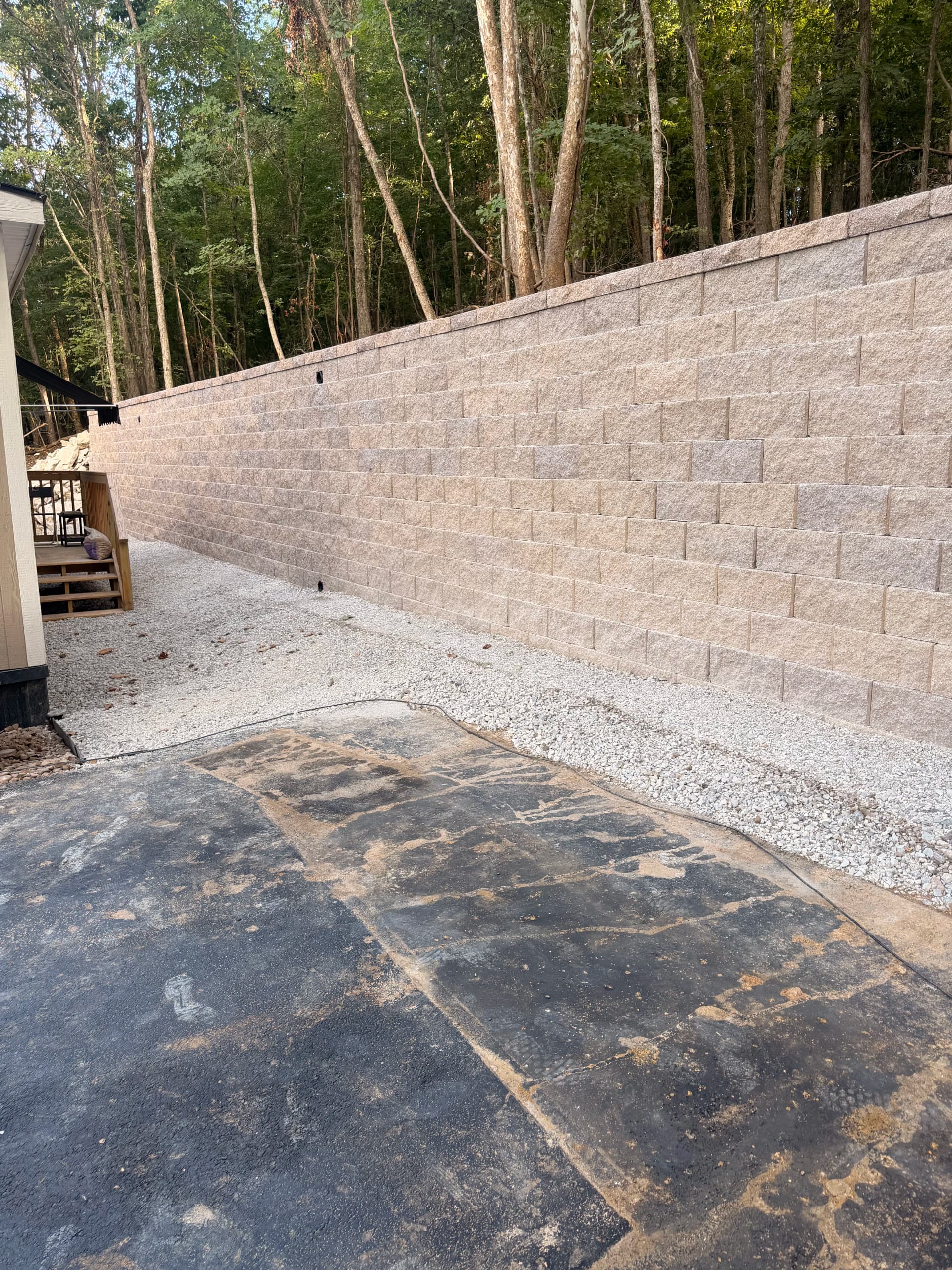
Once we got down to a solid foundation, we set the wall. You can see the segmental block retaining wall going in with a clean gravel base packed tight along the toe. Behind the wall, we laid geotextile fabric and a proper drainage layer to manage water pressure - because a wall without drainage is just a wall waiting to fail. That part matters more than most people realize.
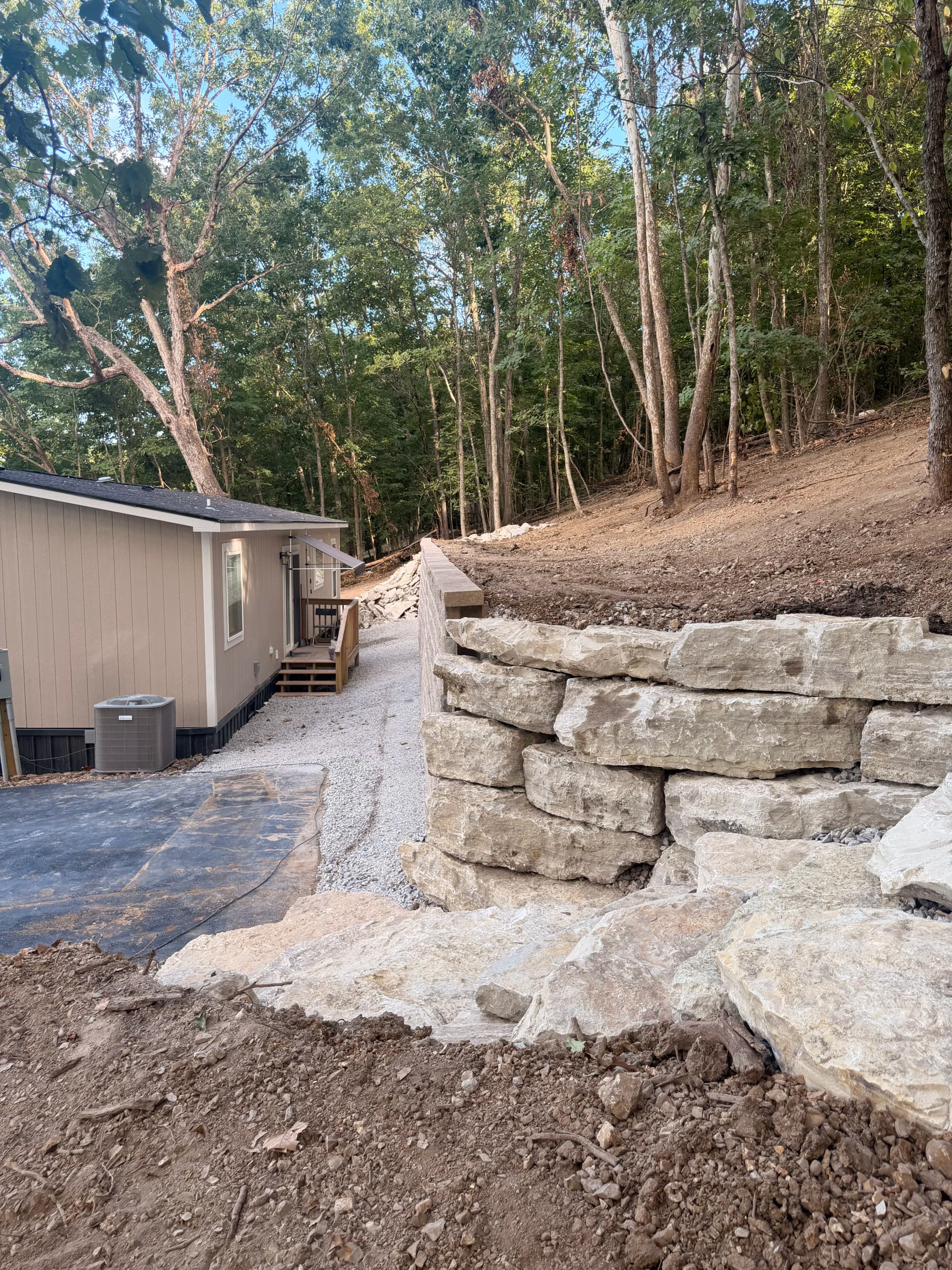
Where the block wall left off, large natural limestone boulders picked up - stacked along the lower end of the site to hold the grade and tie everything together. The finished result is a clean gravel walkway running the full length of the home, protected on one side by a solid wall and no longer at risk from the hillside above.
This is the kind of job that protects a home's long-term value - and honestly, the homeowner's peace of mind. When a slope is actively moving, it's not a cosmetic problem. It's a structural one. Getting it right from the ground up is the only way to actually fix it.